
 Destination
 Tours
Tours Tailor-made tour
 Travel blog
Sapa has long been a popular destination for travelers visiting Vietnam. Located more than 300 kilometers north of the capital Hanoi, Sapa is known for its cool year-round climate, beautiful scenery, and the diversity of its local culture. During the period when Vietnam was a French colony, from the early 1900s, the French built many structures and villas to serve as resorts for French officers who were not accustomed to Vietnam’s tropical climate. According to recorded documents, in 1939, there were 3,000 tourists who visited this charming little town.
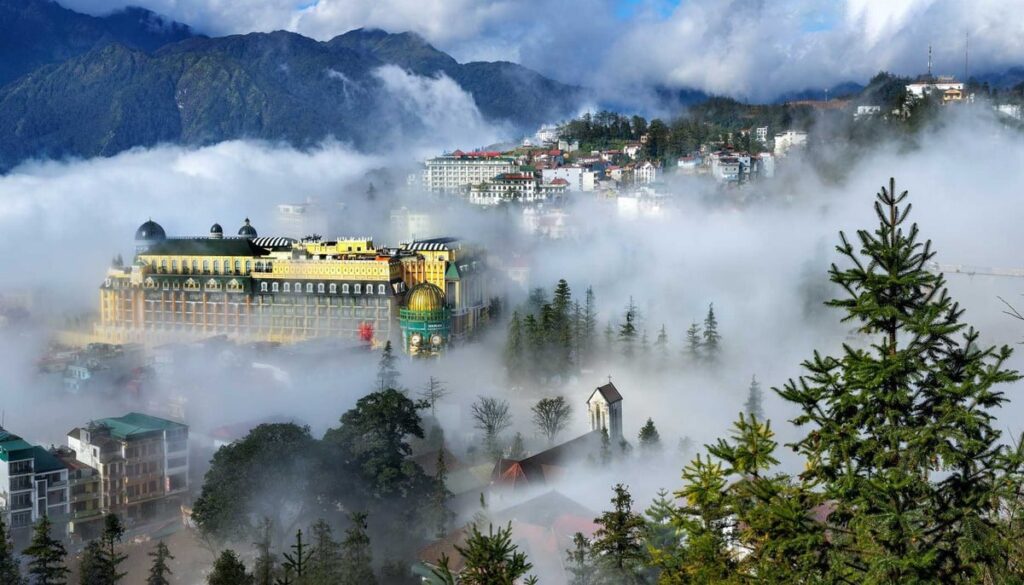
In the 1940s and 1950s, the fierce war for independence by the Vietnamese against the French colonialists brought tourism in Sapa to a halt. Infrastructure and villas were largely destroyed, with almost nothing remaining. The only significant structure that still stands today is the Sapa Stone Church, located in the center of the current town. After the war ended, it wasn’t until the early 1990s that tourism in Sapa began to recover. Despite initial difficulties, Sapa has grown rapidly, and in 2024, it is estimated that over 4 million tourists visited this place.

Six different ethnic groups live together in Sapa: Hmong, Dao, Tay, Viet, Giay, and Xa Pho, with the Hmong making up the largest part of the population.

Sapa can be divided quite clearly into two main areas: the town center and the ethnic minority villages, located around 4 km apart. The town center is more urbanized and attracts large numbers of visitors, with major tourism facilities such as hotels and restaurants. Some of the hotels here have even reached five-star standards. The ethnic minority villages are quieter. They are home to local communities, where people live and work, while also offering homestays for travelers who want to stay away from the busy town center. Besides tourism, the local economy also relies heavily on agriculture and livestock farming. People grow corn, rice, peaches, strawberries, vegetables, and other crops. Along with raising traditional livestock such as buffaloes, cattle, pigs, chickens, and horses, there are also many farms raising sturgeon and salmon, as Sapa’s cool climate is well suited to these fish

Besides its pleasant climate and beautiful scenery, the winding roads leading to Sapa have long been a major attraction for bikers. As an important stop in our Northwest Vietnam motorbike tour group, Sapa promises to be a fantastic destination for your upcoming holiday.

Explore this colorful town on our Sapa Motorcycle Tours:
5-day North Vietnam off-road Motorcycle Tour | Sapa, Mu Cang Chai, Thac Ba Lake
