 Destination
 Tours
Tours Tailor-made tour
 Travel blog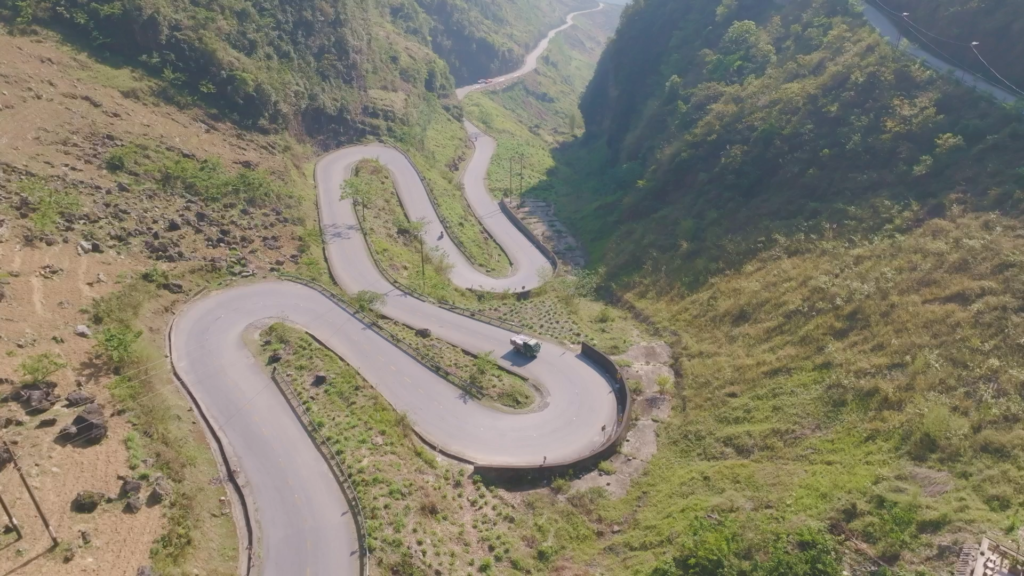
Dong Van is a small mountain town located close to Vietnam’s Northernmost point. It is the main town of the Dong Van Karst Plateau UNESCO Global Geopark and an important stop on the famous Ha Giang Loop. Located at an altitude of around 1000-1600 meters above sea level and about 130 km from Ha Giang City, Dong Van is an important destination on many Northeast Vietnam motorbike tours, offering spectacular scenery, cool weather, and a decent nightlife.
Dong Van has become famous in recent years for its extraordinary mountain scenery, including the iconic Ma Pi Leng Pass and Tham Ma Slope. But beyond its spectacular landscapes, the area is also internationally recognized as a UNESCO Global Geopark.

With fossils dating back as far as 250 million years having been discovered in the area, scientists believe that the Dong Van Karst Plateau preserves evidence of major geological changes across the Paleozoic, Mesozoic, and Cenozoic eras. Perhaps even more interestingly, this land was once beneath the sea.

Tectonic activity divided the area into different structural blocks, while powerful movements of the Earth’s crust created dramatic differences in elevation of up to thousands of meters. Over millions of years, this helped form the deep gorges and canyons that can be seen today, especially across the limestone landscape.
Perhaps the most famous of these is Tu San Canyon, where the river and towering mountains come together to create a landscape capable of overwhelming almost anyone who sees it for the first time.

Dong Van is also home to 17 different ethnic groups. Around a century ago, it was the center of a former H’mong autonomous region in Ha Giang.
From the late 19th century to the early 20th century, this remote region became an area where several different forces competed for influence, including French colonial authorities, warlords from China, and local armed groups. Eventually, the H’mong, under the leadership of a man named Vang Dung Lung, succeeded in driving back rival forces and established their own autonomous territory, with Dong Van as its political center.
Vang Dung Lung was later recognized as the H’mong King and ruled over a large area covering what are now the four districts of Dong Van, Meo Vac, Quan Ba, and Yen Minh. Besides growing rice and corn, the region also earned significant income from the cultivation and trade of opium, including trade with the French.

H’mong autonomy came to an end in 1945, when the second “Hmong King,” Vuong Chi Sinh, reached an agreement with the new Viet Minh government. He accepted a position in the new administration and gave up his former political power.
Today, Dong Van still preserves several important historical sites, including the Dong Van Ancient Town, the Dong Van Old Market, and the H’mong King’s Palace. They are reminders of a complex and remarkable period in the history of the H’mong people in Ha Giang.

More than a hundred years later, these old buildings still stand among the mountains of Dong Van—a reminder of both the harsh history of this land and the resilience of the people who have called it home.

Want to explore Dong Van by motorcycle? Check out our motorbike tours to Dong Van.
5-Day Northeast Vietnam Off-road Motorcycle Tour | Ha Giang, Dong Van, Ba Be lake.
Looking for more options? Explore all our Dong Van Motorcycle Tours.
